If your company's new Adtech or Martech product isn't lighting the world on fire like you hoped it would, don't be took quick to blame your sales team. The problem may be that your GTM process sucks.
In the highly competitive world of AdTech and MarTech, for new products and features to have a shot at success companies need a solid and well-defined go-to-market (GTM) process that ensures alignment across leadership, product, marketing, sales, ad ops and customer success teams. A structured GTM framework helps companies position offerings clearly, communicate value effectively, and enable their sales teams with the right messaging, proof points, and competitive differentiation.
On the flip side, failing to establish a defined GTM process can be costly. Near-term, bad GTMs result in unprepared/uninformed sales teams, incorrect narratives, uninspired marketing and PR executions and a marketplace that doesn't really understand what the value of your product is. Long-term, it can set back your strategic vision - causing you to miss major product milestones by quarters or years - which in AdTech and MarTech is essentially death.
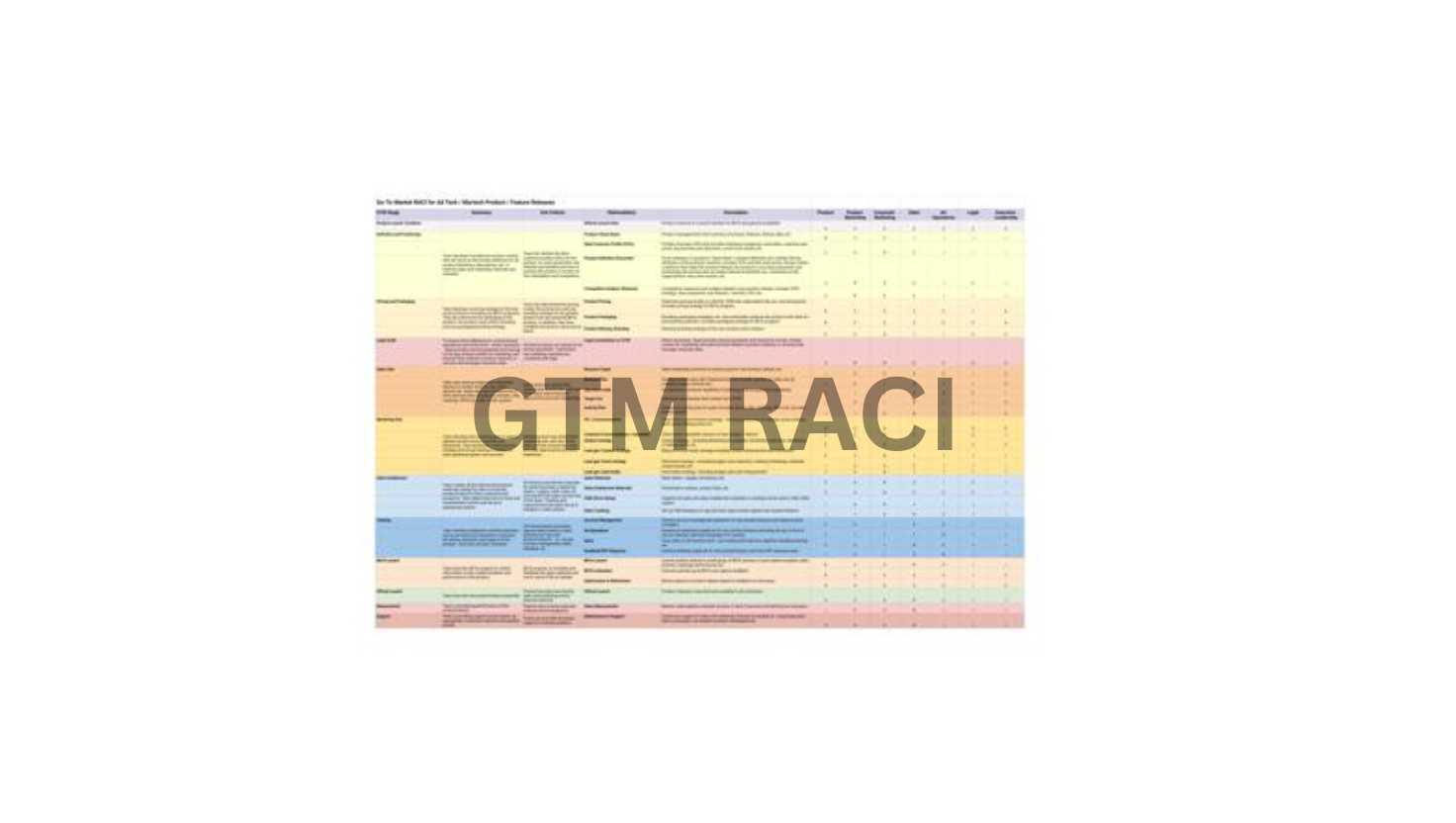
First step towards having a good GTM is having a defined process across departments and disciplines. The attached GTM RACI (Responsible, Accountable, Consulted, Informed) is a comprehensive playbook for delivering new products, features and services to the advertising marketplace - broken down by stage and deliverable.
As AI agents, copilots, and recommendation systems increasingly mediate discovery and decision-making, modern marketing must evolve from human persuasion to machine readability. This post explores why the next winners in Martech and GTM will be the companies that build structured, trustworthy, machine-readable growth infrastructure.
Building an ad tech sales team from scratch is one of the most critical, yet often overlooked skills of a great CRO or sales leader. Early decisions around team structure, market focus, candidate profiles, etc. create the company’s growth ceiling. Get it right, and the team can take off like a rocket - get it wrong, and the rocket will sputter.
Seamless handoffs between sales, onboarding, and customer success are critical to delivering a consistent customer experience and unlocking long-term growth. This post explores where friction typically occurs and outlines actionable strategies to drive retention through structured transitions, shared accountability, and early customer value.

.png)